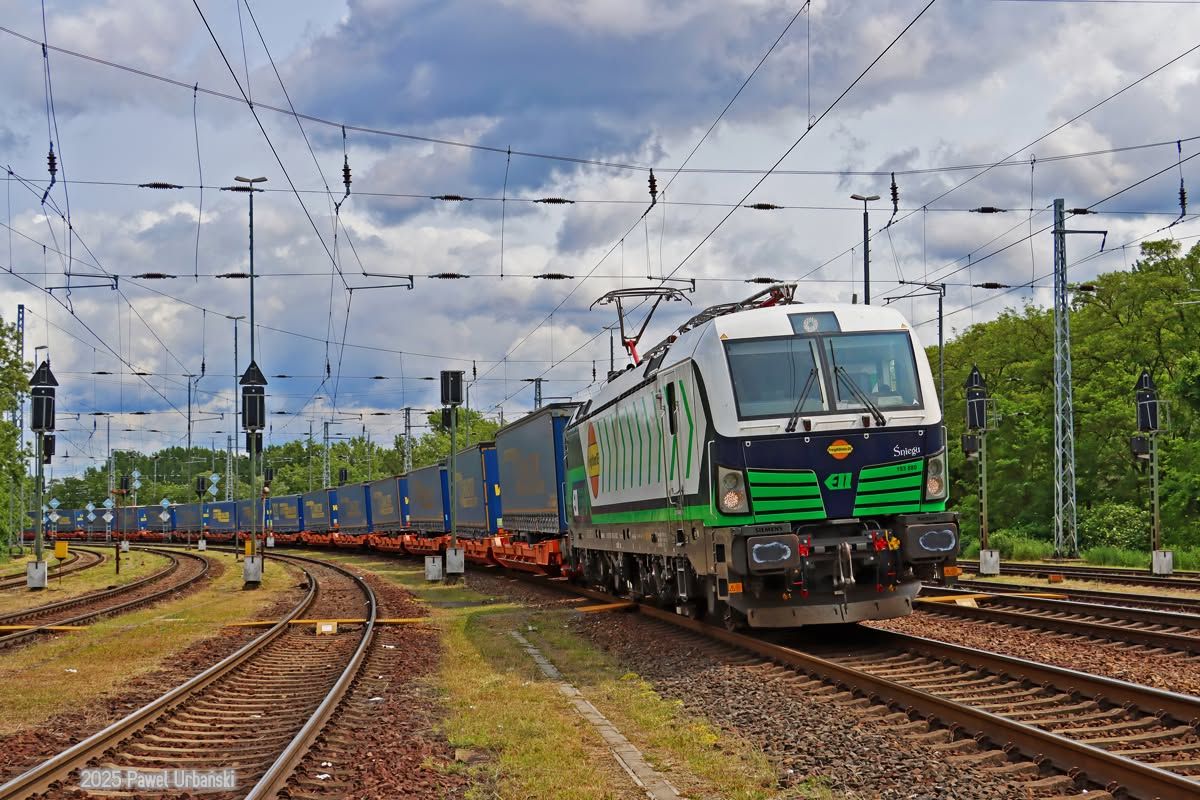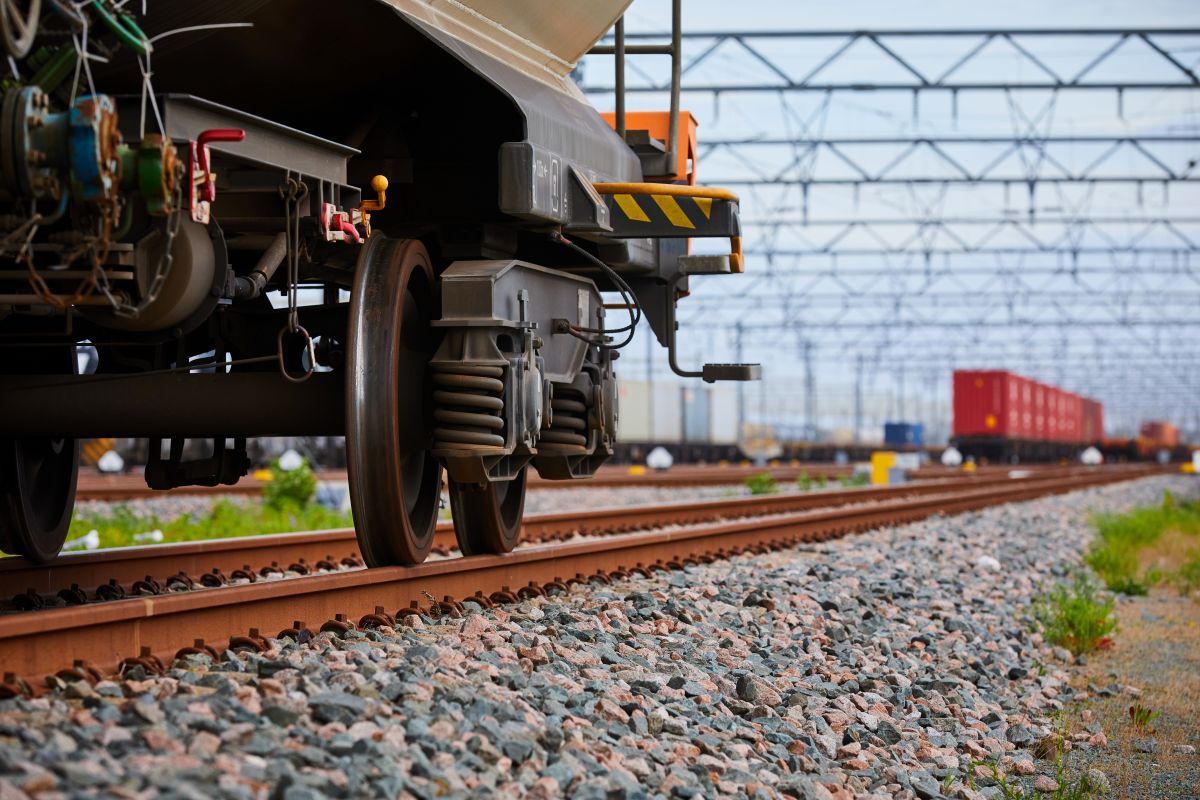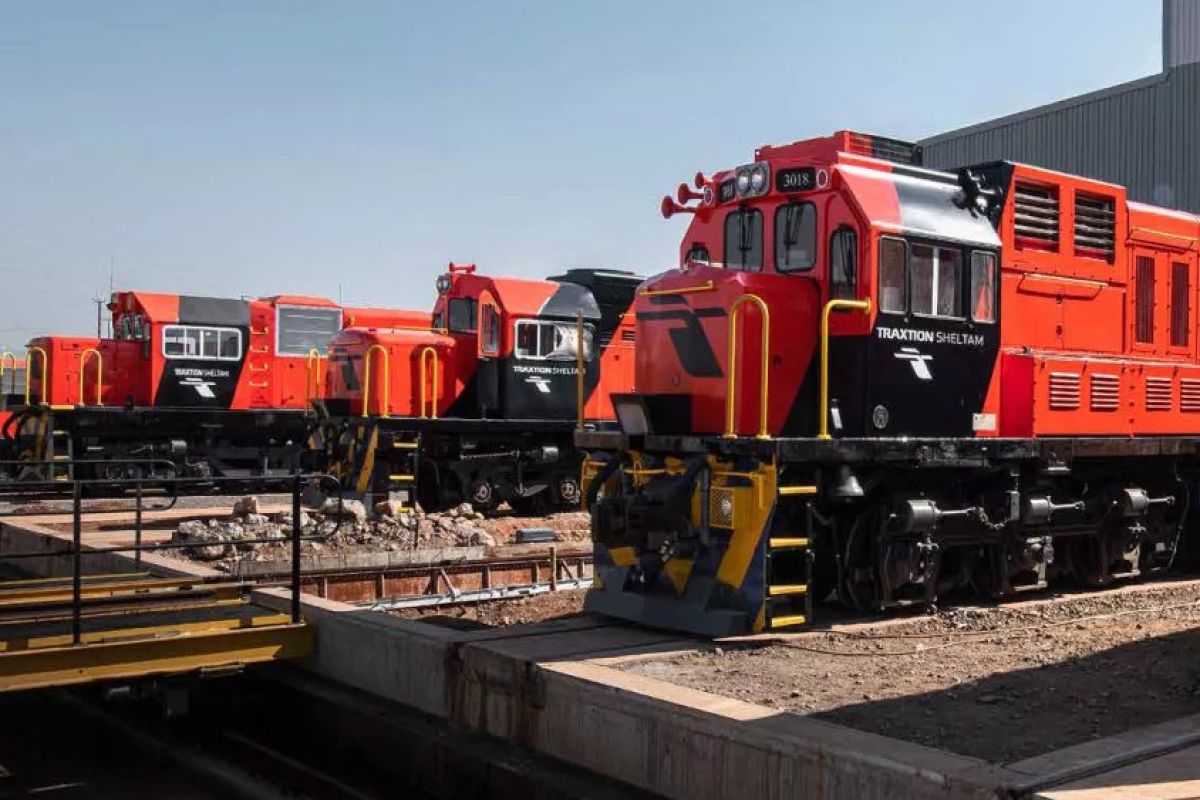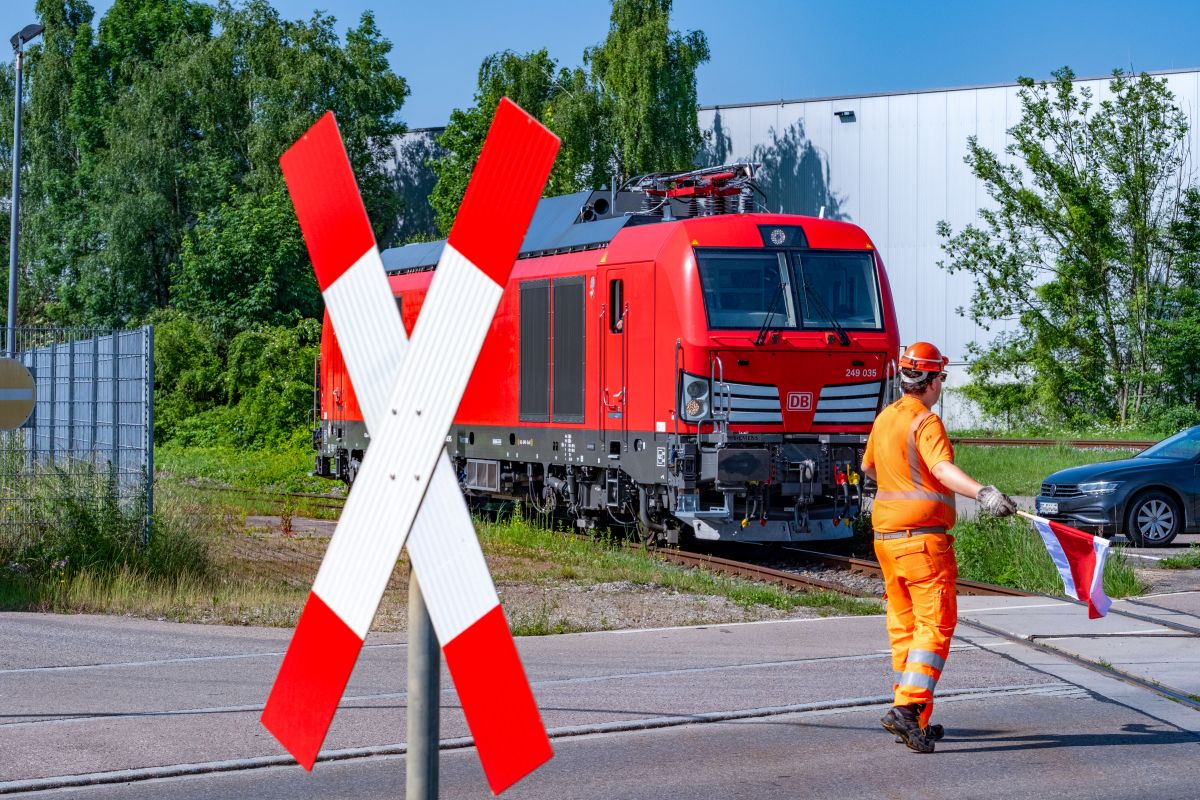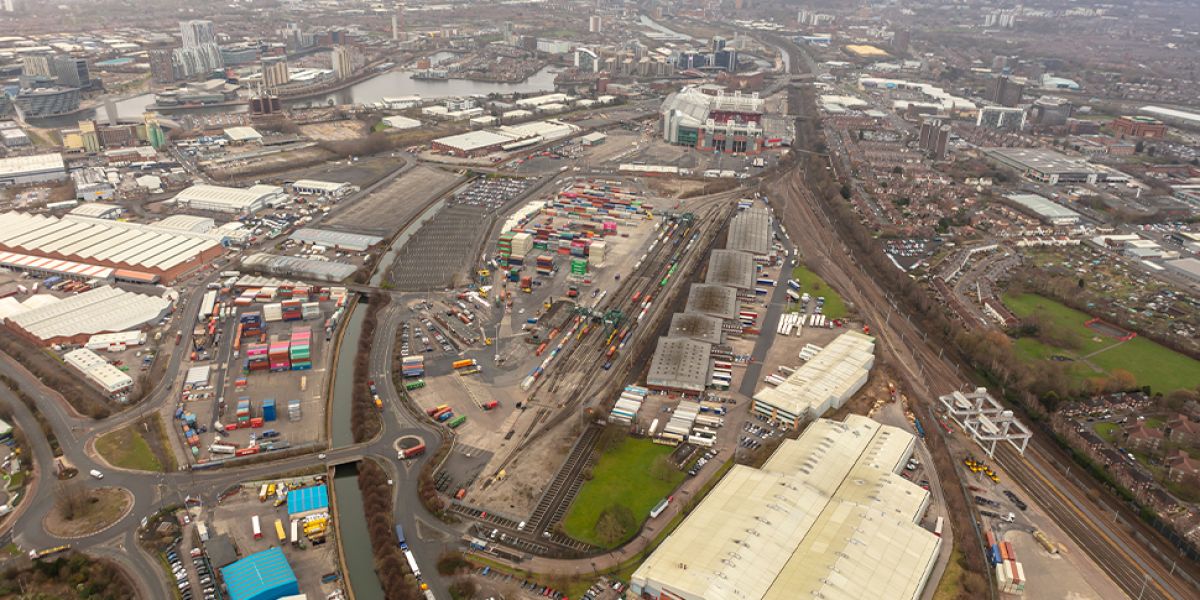
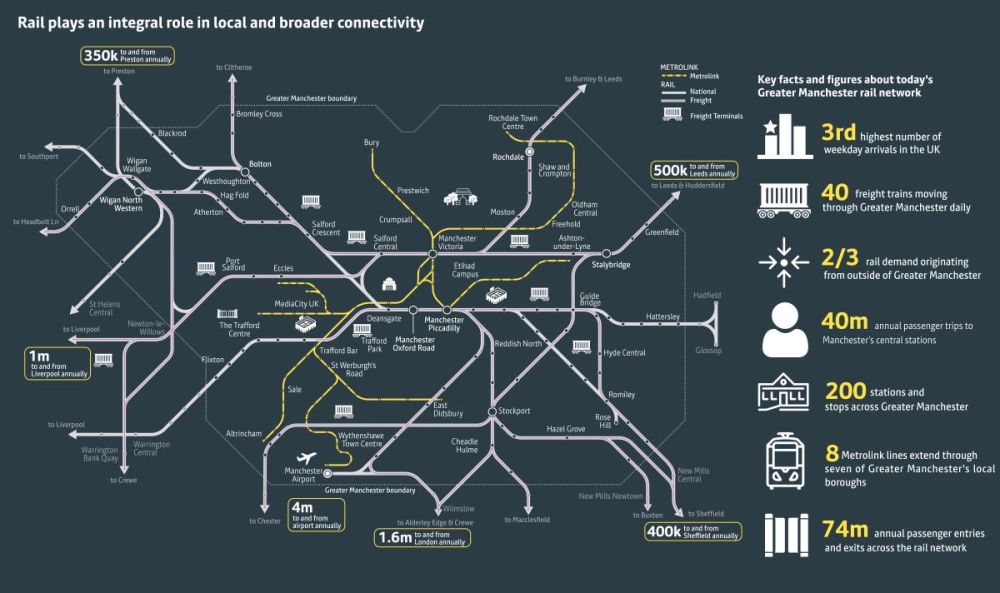
The city region currently sees around 40 freight trains per day, moving 6.6 million tonnes annually. Much of this traffic moves through Greater Manchester between ports and inland terminals, connecting national supply chains.
The demand for freight is expected to rise due to major regeneration, housing, and infrastructure projects. Rail is used to move construction materials such as aggregates and cement, as well as consumer goods and supermarket supplies via intermodal hubs like Trafford Park. Future facilities, including Port Salford and ILP North, are planned to support growth in containerised transport.
The plan supports the national target of a 75% increase in rail freight by 2050. One freight train can replace more than 100 trucks, reducing road congestion and emissions. According to the plan, rail is expected to play a greater role in waste transport and just-in-time logistics as the population and economy expand.
Capacity limitations in Manchester
Capacity limits are a known constraint. Freight traffic often competes with passenger services on busy two-track sections. In central Manchester, corridors such as Castlefield are already at or above 90% of operational capacity. New infrastructure, including the proposed underground station at Piccadilly, is expected to free up space for more freight paths.
The strategy includes closer cooperation with freight operators and national bodies as part of future rail governance. Planning for freight will be embedded in investment decisions, including schemes linked to the Northern Powerhouse Rail and other east–west upgrades.
No specific funding figures for freight infrastructure are mentioned, but private sector involvement is expected. The plan highlights the need for stable, long-term funding to support freight and passenger improvements across the wider Northern Arc.