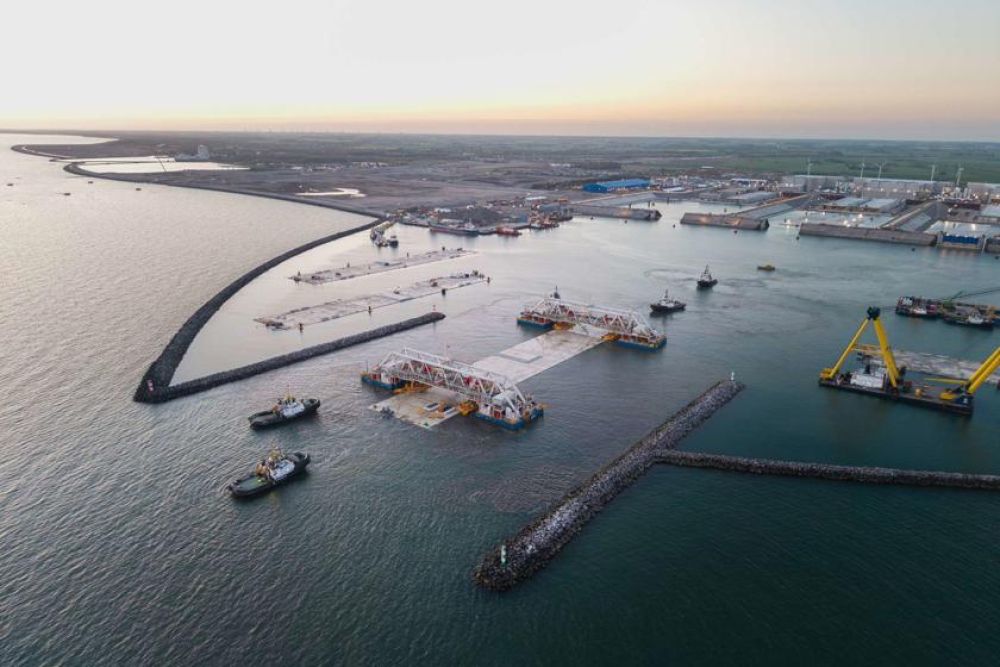
The 217-metre-long concrete unit departed the tunnel factory’s work harbour on 4 May 2026 en route to the offshore trench where installation will begin.
Weighing 73,500 tonnes, the element was fitted with an additional 4,500 tonnes of ballast concrete before departure to ensure it can be lowered to the seabed in a controlled manner. The structure is being towed over a distance of just over two kilometres by five tugboats, supported by a purpose-built immersion vessel.
Each element contains four traffic tubes and a service corridor. Two tubes are designed for a dual two-lane motorway, while two will carry electrified railway tracks. The element remains sealed and air-filled during transport. Because the road tubes are heavier than the rail tubes, temporary water chambers have been installed in the outer railway tube to maintain horizontal balance during immersion.
The tunnel will be placed in a pre-dredged trench between Rødbyhavn and Puttgarden. A gravel bedding layer has been prepared along the alignment to ensure precise positioning, with installation tolerances measured in millimetres. After the element is connected to the tunnel portal, rock and gravel will be placed along its sides to secure it within the trench.
The Fehmarnbelt project comprises 89 prefabricated concrete elements and associated landworks in Denmark and Germany. Once completed, the immersed tunnel will carry a motorway with two lanes in each direction and two electrified railway tracks. The planned crossing time is 10 minutes by road and seven minutes by rail. The project is user-financed and supported by the European Commission.