RM: What was the main impulse behind the development of dry cleaning and how long did it take to develop?
Lukas Rieger, Arideon: The main impulse for the development of dry cleaning was our desire to offer clients a solution that not only saves water but also allows for more flexible vehicle maintenance. We found that many customers did not have easy access to wash bays or sufficient water, which often made regular maintenance difficult. We therefore wanted to develop a method that would allow vehicles to be washed anywhere, without the need for a permanent water source. The development process took approximately two years. We started by testing different eco-friendly chemical mixtures and gradually developed a technology that met our requirements for efficiency, environmental friendliness and cleaning quality.ideon
RM: What specific advantages does dry cleaning offer over traditional train cleaning methods?
Lukas Rieger, Arideon: Dry cleaning offers several advantages. The main one is the absence of water, which particularly saves the environment, and it also allows cleaning to be carried out anywhere, without the need for a wash bay or connection to the water supply network. Another advantage is the speed and gentleness to the surface of the vehicles - dry cleaning is less aggressive than machine washing, while protecting the paintwork on trains that can be damaged by traditional methods. In addition, we can provide body waxing after the cars are washed, which provides hydrophobic protection and less susceptibility to further contamination.
RM: What else can this method be used for?
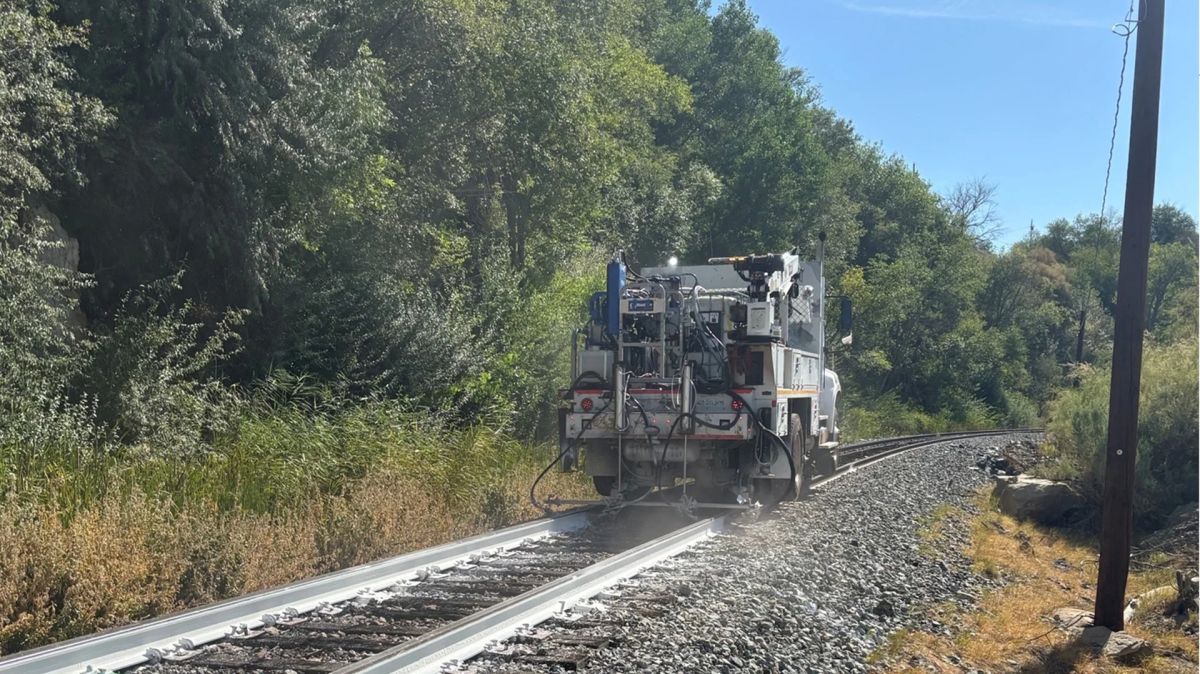
Lukas Rieger, Arideon: This cleaning method gives us complete flexibility, so it is possible to use the same technology on other vehicles such as buses, trucks and any other type of transport unit. As an example, we operate a washing line for Marius Pedersen, one of the largest companies in the waste management industry, where, in addition to washing the bodywork itself, we also provide a complete washing of the interior of the vehicle, specifically for garbage trucks, the engine and the entire body, including the internal moving parts. Thanks to 3D printing, we are able to produce any attachment that is needed for the job.
RM: How does dry washing work in extreme conditions, such as very low temperatures or in an area with limited access to water?
Lukas Rieger, Arideon: We have designed dry cleaning to work even in challenging conditions. The special chemistry we have developed is effective even at low temperatures close to zero. This means we can carry out the cleaning process even in the winter months, when traditional washing is often problematic. This allows us to clean trains even in remote locations or stations where water is not easily accessible. Our method eliminates the need for complicated logistics, so washing can be done right where our client needs it.
RM: Dry cleaning is designed to be environmentally friendly. What innovations does it offer in this area and how does it contribute to environmental protection?
Lukas Rieger, Arideon: Dry cleaning is innovative in that it does not require any water, thus contributing to a significant saving of this precious resource. Our eco-friendly chemicals are designed to be biodegradable and minimise negative environmental impacts. This makes dry cleaning the ideal solution for companies looking to minimise their environmental footprint.
RM: Your company is known for its other products in the rail vehicle maintenance sector. How are the services you offer evolving, for example in the area of deep cleaning of train interiors?
Lukas Rieger, Arideon: Our philosophy is to provide comprehensive vehicle care, so we are constantly innovating and expanding our service offering. In the area of interior deep cleaning, we have focused on machine cleaning of fabric seats and upholstery, which significantly extends the life of the materials and at the same time improves hygienic conditions for passengers. In addition, we offer disinfection of interior spaces using ozonizers, which is particularly important nowadays, when great emphasis is placed on cleanliness and hygiene of traffic. We are constantly monitoring new technologies and procedures in order to provide our clients with the most modern and efficient solutions. However, we always test these innovations very thoroughly first before introducing them to the market.
RM: One of your specialties is the removal of graffiti from train sets. Can you tell us about the methods and technologies you use to remove graffiti quickly and efficiently?
Lukas Rieger, Arideon: Graffiti removal is one of our key services because we know how important a quick and effective solution is. We remove graffiti using the dry method, without the use of any water, which prevents the creation of further hazardous waste. We remove it from the interiors of trains as well as from the exterior parts of trainsets. We use our own chemicals that are specially developed for this purpose and are effective even at low temperatures. In the interior, we apply anti-graffiti wipes, which allow immediate removal of the paintings once the train arrives at its destination. On the exterior of the car bodies we use a special chemical that can remove graffiti quickly without damaging the car surface or paintwork. Speed is a key success factor - we aim to remove graffiti within the second day of reporting to avoid it eating into the material.
RM: Where do you see the future of train maintenance and what further innovations can we expect from Arideon in this area?
Lukas Rieger, Arideon: We see the future of train set maintenance primarily in automation and the use of green technologies. At Arideon, we are constantly monitoring new trends and working on developing more mobile solutions that will make it easier for our clients to maintain their vehicles in the field. In the future, we would like to invest more in automated cleaning systems and technologies that minimize environmental impact. We also plan to expand our service offering with new cleaning and maintenance methods that reflect the needs of modern railway operations and the high demands on hygiene and ecology. Including protective coatings against graffiti.
RM: How are you able to respond to the specific needs and problems of your clients in the field of train cleaning?
Lukas Rieger, Arideon: Flexibility and individual approach to clients are key pillars of our service. We understand that each operation has its own specific needs and problems, and we are ready to respond to any challenges. For example, if a client is faced with unexpected contamination or a sudden maintenance issue, we are able to deploy our teams immediately and provide a quick and effective solution, often within the next day. With our wide range of services, including mobile washing lines and deep cleaning capabilities, we can tailor our processes and technology to meet the exact requirements of the client. If a completely new solution is required, we can work with you to develop a technology or process that fits the specific problem. In this way, we ensure maximum satisfaction and minimize downtime in our clients' operations. And our services gain additional added value, which we are then happy to offer to all other clients.