RM: Rail freight operators frequently face issues related to wagon overloading. How does Cargomon address this?
Stefan Mahlknecht, Cargomon: Overloading is a major concern, particularly due to strict railway checkpoint controls in Austria and Switzerland, but not only there. To avoid penalties, operators often intentionally underload wagons, reducing their competitiveness against road transport. Cargomon’s sensor technology provides real-time, precise load measurements, enabling operators to safely optimize loading capacities, thus increasing efficiency by potentially 10-20%.
RM: Which freight sectors specifically benefit most from Cargomon’s sensor technologies?
Stefan Mahlknecht, Cargomon: Our solutions currently provide significant advantages in timber and scrap metal transport, primarily involving open-top wagons. Rail Cargo Austria, for instance, employs our real-time weighing solution for timber wagons. Operators can see exact load data directly on their mobile phones via Bluetooth, even in remote locations without internet connectivity, significantly improving load optimization and safety.
RM: Scrap metal transport is notoriously challenging due to uneven loads. How exactly do your sensors help in these situations?
Stefan Mahlknecht, Cargomon: Unevenly loaded wagons pose a risk of shifted loads, which can severely damage bogies and track infrastructure. Our sensors continuously monitor wagon weight distribution in real-time. If a dangerous load shift occurs, locomotive drivers receive timely alerts, allowing them to quickly adjust speed or remove the wagon from service to prevent serious incidents.
RM: You recently mentioned innovative axle-mounted sensors for detecting wheel and bearing problems. Can you elaborate?
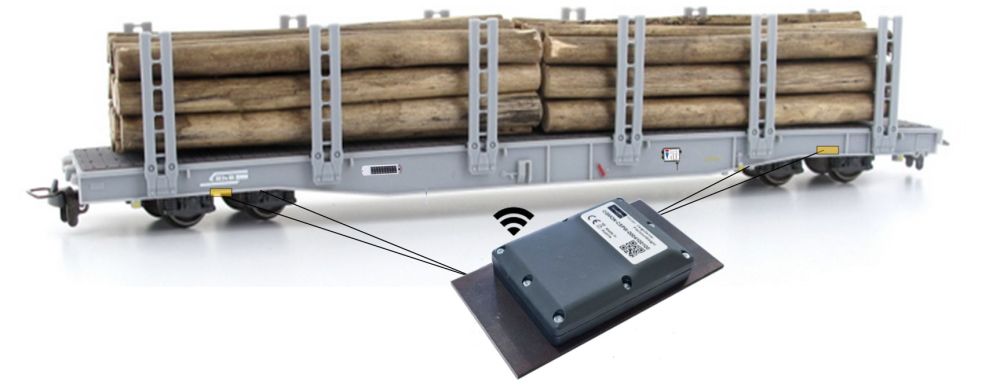
Stefan Mahlknecht, Cargomon: Yes, this is a significant recent development. Our axle sensors detect flat spots on wheels, bearing failures, and overheating. They’re cost-effective and easily installed via glue or screws, making them ideal for widespread freight wagon use. Field testing is currently underway, and we plan a market launch by the end of the year, significantly enhancing maintenance safety and reducing downtime.
RM: Rail cargo operators typically request highly customized solutions rather than generic packages. How does Cargomon respond to such specific demands?
Stefan Mahlknecht, Cargomon: Indeed, standardized bundles generally do not meet our customers’ diverse operational requirements. Each customer and wagon type has unique sensor needs. We start by understanding these specific requirements and deliver tailored combinations of sensors, ensuring optimal cost-efficiency and effectiveness. Our customers, including DB Cargo and Rail Cargo Austria, often deploy specific sensor sets selectively, aligning precisely with their operational strategies.
RM: Could you explain how your business transitioned primarily into rail freight solutions?
Stefan Mahlknecht, Cargomon: Cargomon started in 2009 focusing on container and truck telematics. However, from about 2017 onward, rail freight operators significantly accelerated telematics adoption following major players like VTG. Responding to this market shift, rail now accounts for the biggest part of our business. Our ability to offer complete, flexible sensor suites at competitive prices has allowed us to successfully establish our presence in the rail sector.
RM: Do you anticipate telematics systems becoming standard factory equipment on freight wagons, like the truck industry?
Stefan Mahlknecht, Cargomon: Not in the near term. Rail freight manufacturers traditionally build wagons strictly to customer specifications without proactively integrating telematics. Although this could change eventually, currently, wagon telematics remain driven explicitly by end-user demands, which vary significantly across operators and their customers.
RM: What impact does the future Digital Automatic Coupling (DAC) implementation have on telematic sensor deployment?
Stefan Mahlknecht, Cargomon: DAC remains a considerable uncertainty in the industry. Many operators are cautious about investing heavily in braking-related sensors until there's clarity about DAC specifications and timelines. Although I expect DAC will eventually be implemented, this will likely be later than many expect. This uncertainty currently poses a challenge to full-scale digitization but doesn’t diminish the overall drive towards greater sensor-based innovation.