Mobile, but more importantly data, connectivity on the railways is problematic in many European countries. Germany wants to try to solve this problem first on one of their most exposed tracks.
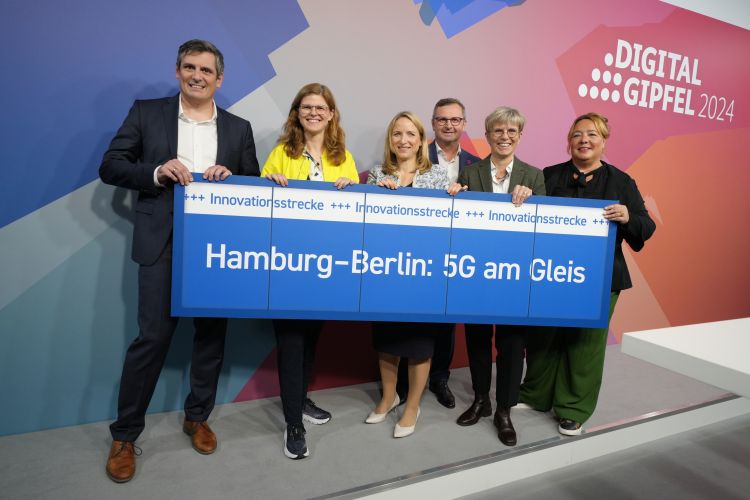
The Hamburg-Berlin railway line is to become Germany's innovation route for mobile communications with gigabit data rates on the train. Thanks to seamless 5G coverage, rail passengers travelling on one of Germany's most important city links could be able to make phone calls and surf the internet in the best quality in the future. A declaration of intent for the technology-open testing, development and application of a corresponding supply concept "5G on the tracks" was signed by Deutsche Bahn (DB), the mobile phone companies and the federal government.
Volker Wissing, Federal Minister of Digital and Transport, explains: "Our gigabit strategy aims to enable gigabit bandwidths wherever people live, work and travel. With the MoU, we are supporting the ambitious timetable for the upcoming general overhaul of the Hamburg–Berlin line with an equally ambitious gigabit roadmap."
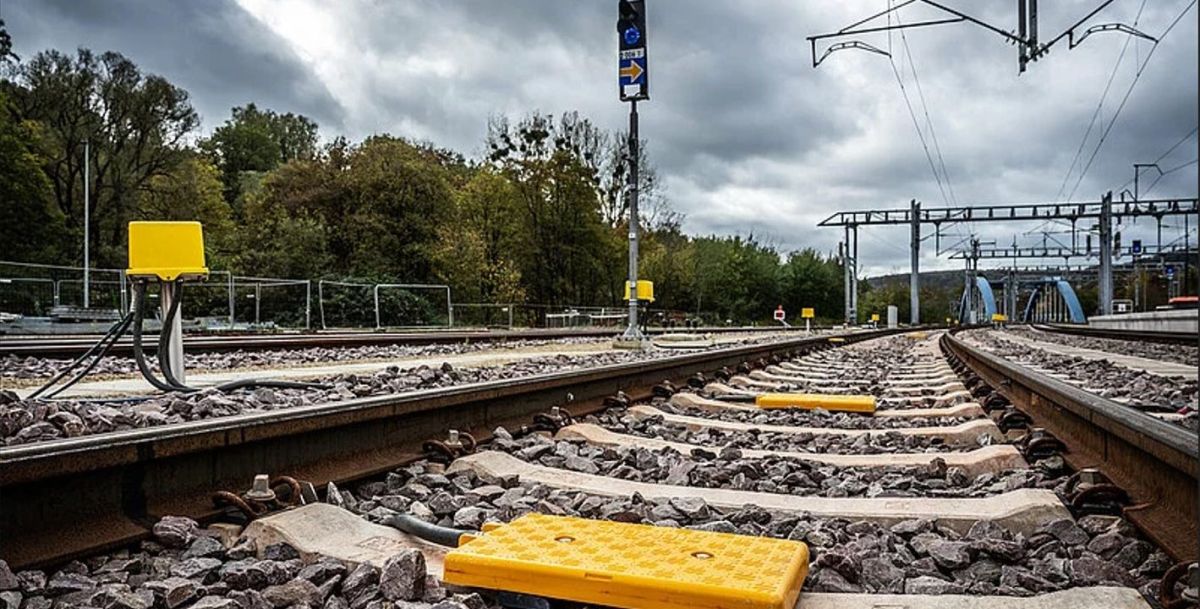
As part of the general overhaul of the Hamburg–Berlin line between August 2025 and April 2026, DB will use the track possession to set up radio masts for the future FRMCS (Future Rail Mobile Communication System) railway radio. FRMCS is based on the latest and most powerful 5G mobile communications technology. The mobile network operators will examine the extent to which they can offer rail travellers gigabit bandwidths for mobile and data connections in the future by sharing the new, trackside radio masts.
Daniela Gerd tom Markotten, Board Member for Digitalisation and Technology, Deutsche Bahn, adds: "Rail passengers expect excellent data and mobile phone connections. Germany's mobile phone companies and DB are therefore joining forces to provide passengers with gigabit data rates."
The 278-kilometre railway line between Hamburg and Berlin is one of the busiest in Germany. Up to 230 trains and 30,000 passengers use the line every day. As part of the upcoming general overhaul of the line, DB is combining work on the tracks, points and overhead lines, upgrading several stations and renewing the control and security technology. After that, no major construction work will be required for several years. DB also wants to use the planned closure of the line for several months to set up the infrastructure for the future FRMCS rail radio system (Future Rail Mobile Communication System). FRMCS will replace the current GSM-R rail radio system throughout Europe by 2035.