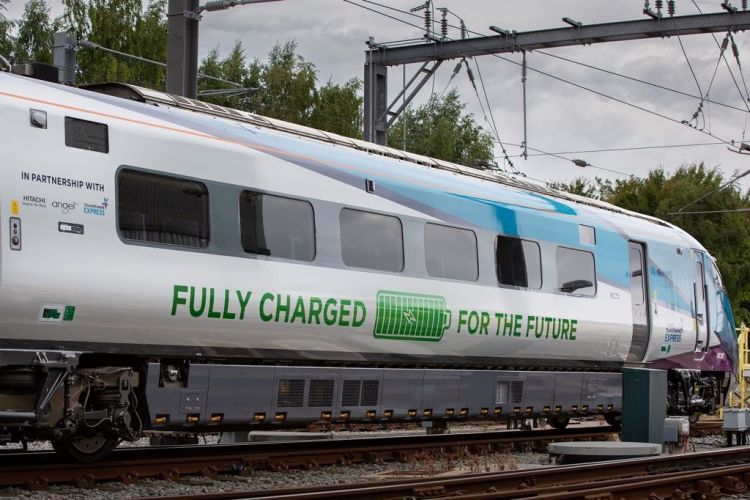
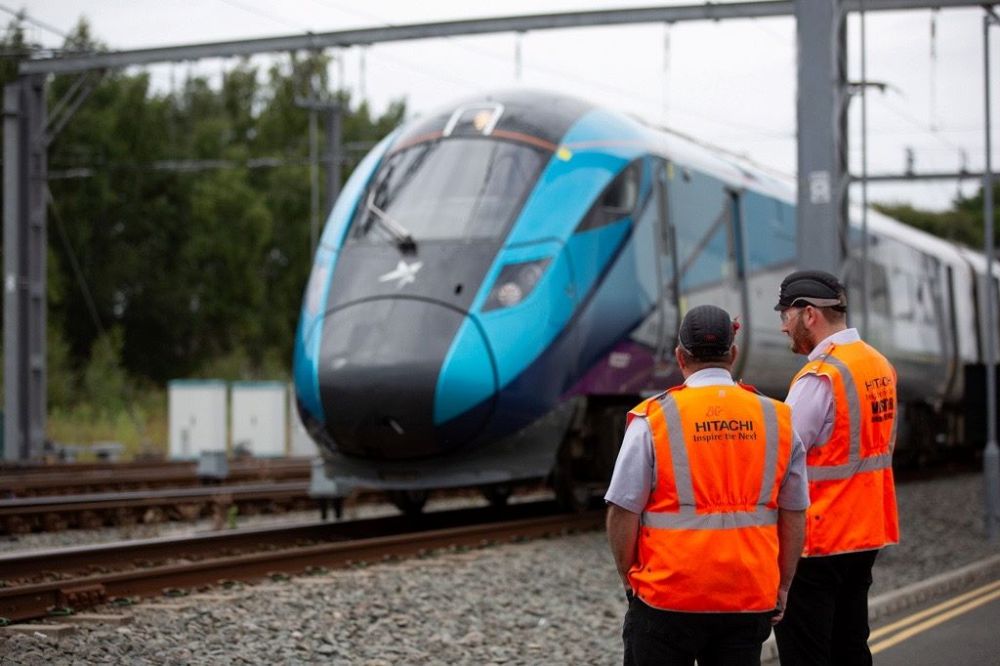
The train, which previously completed low-speed trials at Hitachi Rail’s Newton Aycliffe facility, will now undergo testing on routes between York and Manchester Airport, and Leeds to Liverpool Lime Street over the next two months.
The testing program, a collaboration between TransPennine Express (TPE), Angel Trains, and Hitachi Rail, aims to evaluate the train’s performance in various scenarios. These include its ability to maintain speed on inclines, regenerative charging through braking, and operating in zero-emission mode within station areas. The distinctive new livery on the train reflects this joint effort to explore cleaner and more efficient rail technologies.
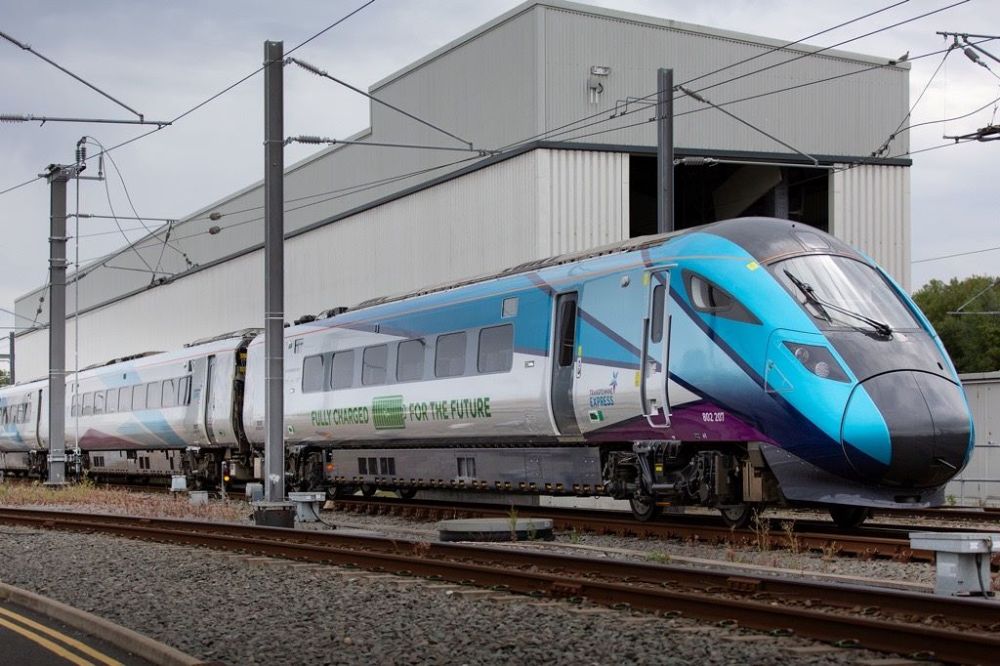
The train in question is a retrofitted version of TPE’s ‘Nova 1’ Class 802, a five-carriage intercity model. The retrofit replaces the diesel engine with a battery system that generates over 700 kW of peak power. Projections suggest that this technology could cut emissions and fuel costs by up to 30%, presenting a viable option for reducing the environmental impact of rail travel without the need for extensive infrastructure changes, such as overhead electrification.
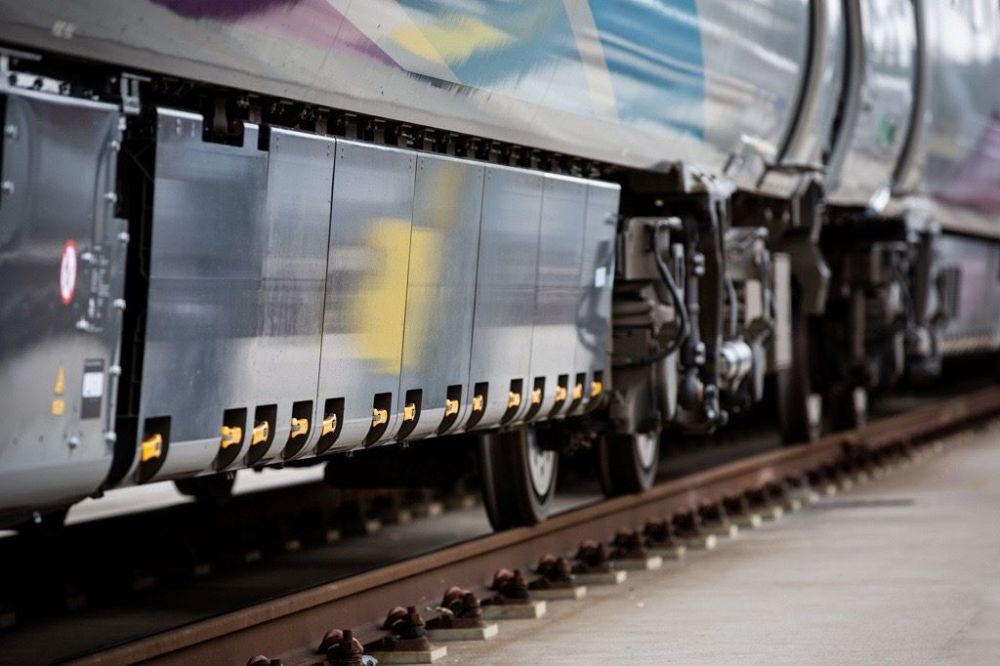
This project is particularly focused on the potential for battery technology to reduce the need for traditional electrification in challenging areas, such as tunnels and complex junctions. By successfully demonstrating these capabilities, the initiative supports broader goals of decarbonizing the rail sector, both in the UK and globally.
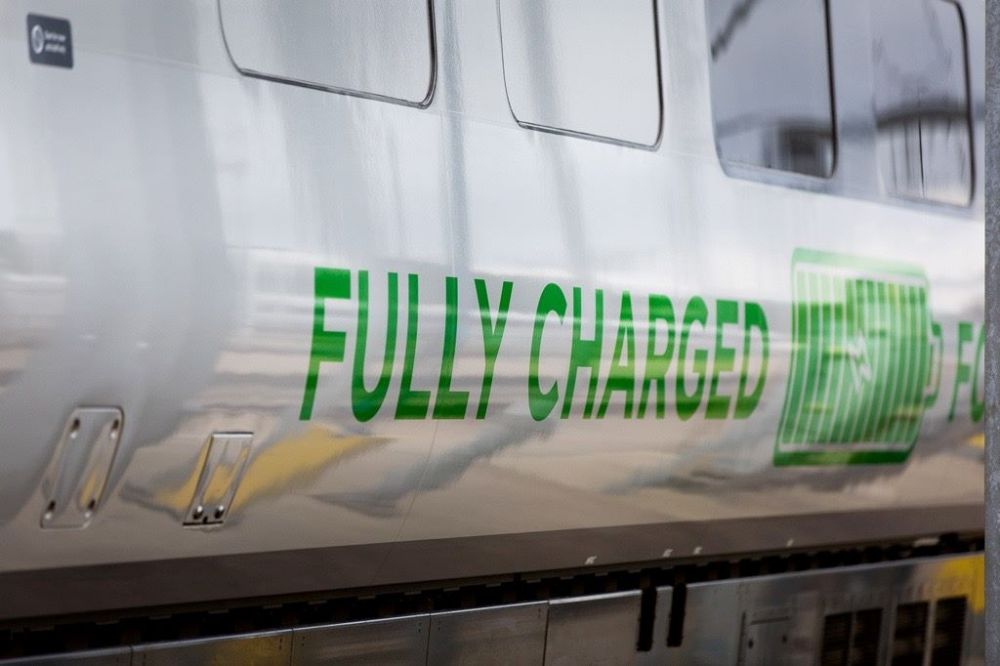
The trial is also a part of a wider effort to support the UK battery industry, with Hitachi Rail having invested over £15 million in partnership with Turntide Technologies in Sunderland. This aligns with Hitachi’s global efforts to develop and deploy battery technology in passenger trains, building on its experience in Japan and Italy, where battery hybrid trains have already been rolled out.
Should the trials prove successful, the technology could be a key element in transitioning away from diesel-powered trains, which remain prevalent worldwide. This battery retrofit approach offers a potentially cost-effective path to achieving net-zero targets in the rail industry.