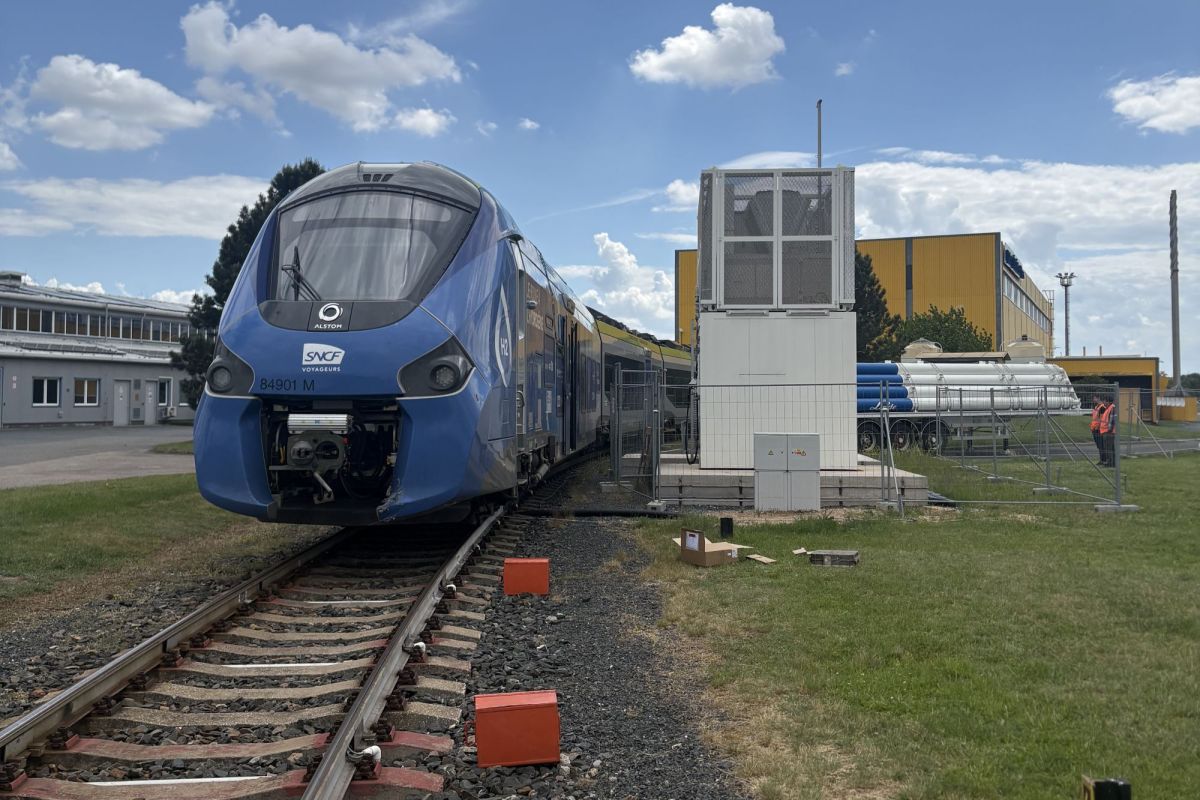
CAF and SNCF Voyageurs are continuing the dynamic testing of the first OXYGENE train, a new model for the improvement of regional rail services in France. The tests began in July 2023. They are taking place at the Velim test site in the Czech Republic and will continue for the next 18 months.
The test programme consists of several phases. First, the train will undergo one year of static and quasi-static tests with four trainsets. Then there are six months of dynamic adjustments with two trainsets, one year of certification tests, and six months of performance validation and route simulation.
The OXYGENE train has successfully reached this speed in Velim, where the infrastructure allows up to 200 km/h speeds. The current focus is on the traction, braking and signalling systems. These tests are essential to ensure that the train meets the safety standards for use on the national network. SNCF Voyageurs drivers are also getting hands-on experience with the new train.
At the same time, another OXYGENE train is undergoing climatic comfort tests. The aim is to evaluate the air conditioning system's performance in temperatures ranging from -20 to +45°C.
The first train is expected to be in service by the end of 2024. Homologation tests are scheduled for February 2026, with market approval expected by the end of 2026. Following approval by the railway safety authorities, commercial service is expected to commence by the end of the first quarter of 2027.
With 420 seats per train and up to 840 seats in a double configuration, the new OXYGENE trains will offer increased capacity. It also features ergonomic seats, WiFi, sockets, USB ports, real-time travel information and bike storage.