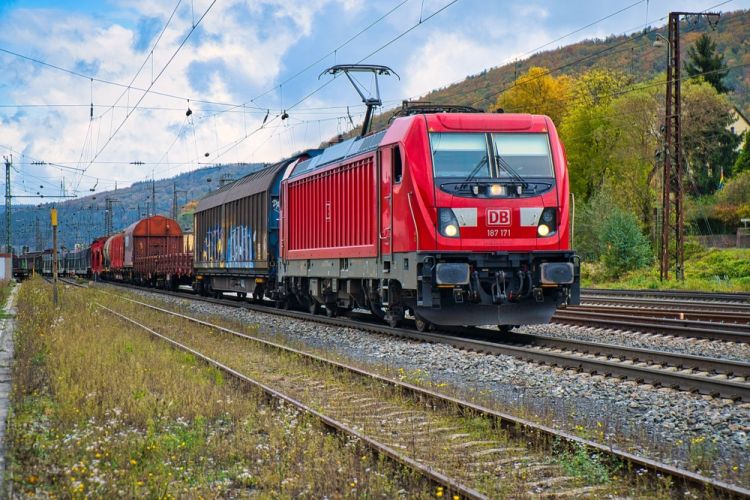
Top players in European freight rail are shaking in their foundations. After the European Commission’s objection against state aid to Fret SNCF, and the sharp fall, problems and restructuring for survival of PKP CARGO, even the top player in freight rail industry in Europe faces problems. After many years, when its hundreds of millions of losses were covered from the profit of its mother company – Deutsche Bahn – the European Commission decided that this will no longer be possible, Süddeutsche Zeitung reports.
Deutsche Bahn’s freight subsidiary, DB Cargo, will no longer receive financial backing from its parent company starting in 2025, according to recent developments. This decision follows an investigation by the European Commission, which scrutinized the financial arrangements between the state-owned Deutsche Bahn (DB) and its freight division. The Commission raised concerns that the ongoing financial support constituted illegal state aid, potentially distorting competition in the freight transport sector.
The move to sever financial ties is expected to have far-reaching implications for DB Cargo, which has consistently operated at a loss. With the cessation of support from Deutsche Bahn, the subsidiary now faces the challenge of financial self-sufficiency. Industry observers are questioning whether DB Cargo can achieve profitability after years of dependence on its parent company’s resources.
DB Cargo’s financial struggles are compounded by several factors, including a sluggish economy, increased competition from private operators, and internal inefficiencies. Despite efforts to streamline operations, such as reducing administrative overheads and restructuring management, the company’s performance has continued to lag. In the first half of 2024 alone, DB Cargo reported a loss of €261 million, adding to the billions in losses accumulated over recent years.
The decision to end financial support comes at a time when Deutsche Bahn is undergoing significant changes. The potential sale of its profitable logistics arm, Schenker, and the recent establishment of Infrago, a new subsidiary managing the rail network and stations, indicate a shift in focus for the state-owned company. As Deutsche Bahn continues to restructure, questions remain about the future role of DB Cargo within the broader organization.
For the German rail sector, the upcoming changes at DB Cargo could lead to shifts in market dynamics, particularly in freight transport. With the loss of its financial safety net, DB Cargo’s ability to compete in a challenging market will be tested, raising concerns about the long-term viability of the subsidiary and its impact on the overall freight transport landscape.
As the 2025 deadline approaches, the railway industry will be closely watching how DB Cargo adapts to these new financial realities and whether it can maintain its position in the market without the backing of Deutsche Bahn.